How to Practice Line Dancing at Home (From a New Boots Line Dance Instructor)
Hey y’all—Jess here, co-founder of New Boots Line Dancing. One of the questions we hear all the time is “How can I get better at line dancing outside of class?”
The short answer? Practice at home.
The great news is that you don’t need to turn your living room into a dance studio or spend hours drilling steps. With a little consistency and the right approach, practicing line dance at home can seriously boost your confidence, memory, and overall enjoyment on the dance floor.
Whether you’re brand new to line dancing, jumping back in after some time off, or dancing with us every week and wanting to level up, this guide is for you.
Before we get into the basics of practicing at home, we recommend you also check out our blogs on 10 Dance Moves Everyone Should Know and How To Host Your Own Line Dance Party At Home.
We also recommend checking out our video tutorial which you can watch below.
Why Practicing Line Dancing at Home Makes Such a Difference
Classes and social dances are what brings people together and is the amazing social element of line dancing. There is high energy, music, friends, and laughter. But they’re not always the best place to slow down and really lock things in. If you’re really wanting to be build your skill, practicing alone is essential.
Practicing line dancing at home helps you:
Remember dances more easily
Improve footwork and timing
Feel confident walking into class
Stop feeling “behind” when new dances come up
Actually enjoy dancing instead of stressing about the steps
I promise you that confidence on the dance floor doesn’t come from talent. It comes from familiarity. And familiarity comes from repetition.
You Don’t Need Much Space (Seriously)
One of the biggest myths about practicing at home is that you need a ton of room. You really don’t! Line dance doesn’t take up very much room.
Here’s all you need:
Enough space to take a few steps forward, back, and side to side
A floor that isn’t slippery
Comfortable shoes (dance shoes if you have them, sneakers if you don’t)
Most line dances repeat over and over, so even a small area works just fine.
Focus on the Dances You’re Learning at New Boots
When practicing at home, don’t try to practice everything you’ve ever learned. That’s a fast road to frustration. Keep it simple to get really comfortable.
For the best experience, I recommend focusing on:
Dances we’re currently teaching at New Boots Line Dancing
Dances you know but don’t feel confident with yet
One or two favorites you want to feel solid anywhere you dance
This way, when you walk back into class or hit the dance floor, things already feel familiar, and that’s huge. You can enjoy yourself without having to do the constant mental math that is common when you’re just starting to learn.
Break the Dance Into Sections
If you’ve ever thought, “I know this dance… until about halfway through,” this one’s for you.
Instead of running the entire dance over and over:
Start with the first 8 counts
Repeat until it feels comfortable
Add the next 8 counts
Connect them together
Slowly build to the full dance
This works way better than pushing through the whole thing while hoping your brain catches up.
Slow It Way Down (More Than You Think)
No one wants to practice slowly. But slowing things down is one of the best ways to improve your line dancing at home.
Slow practice helps you:
Understand weight changes
Clean up foot placement
Fix little timing issues
Stop guessing and start knowing
Practice without music, count it out loud, or use a slower version of the song. Speed will come later. Control comes first.
Practice With Counts and Music
Line dancing lives in both worlds of counts and music. You need both.
Try this:
Walk through the dance using counts
Then practice it with the song
Pay attention to where steps match musical accents
Notice pauses, hits, and rest moments
When the dance feels connected to the music, everything gets easier (and more fun!).
Direction Changes Are Worth Extra Practice
A lot of dancers know the steps but get turned around (literally!).
At home, spend extra time on:
Direction changes
Turns
Facing the correct wall
The last 8 counts and restart
Multi-wall dances especially benefit from this kind of practice. If you can confidently restart the dance, you’ll feel way more relaxed on the floor.
Use Dance Videos the Right Way
Dance videos are a great tool (if you don’t rely on them too much).
Here’s how I recommend using them:
Watch once without dancing to understand the structure
Dance along a few times
Then turn the video off and test your memory
If we’ve shared recap or demo videos at New Boots Line Dancing, those are your best bet since they match what you’re learning in class.
Don’t Forget to Just Dance
Practice shouldn’t feel like homework.
Mix things up:
Warm up with an easy, fun dance
Practice one tricky section
End by dancing a full song just for fun
Sometimes the best practice is simply moving, smiling, and remembering why you started line dancing in the first place.
Add Style Once the Steps Feel Solid
Once the steps are comfortable, home practice is a great place to work on style without feeling self-conscious.
You can play with:
Arm movement
Posture and balance
Head direction
Sharp vs. smooth movement
Making steps bigger or smaller
Style is personal, and it’s what makes dancing feel like you.
Consistency Beats Long Practice Sessions
You don’t need hour-long practice sessions. In fact, short and consistent is better.
Try:
10–15 minutes
2–4 times per week
Focused on one or two dances
Your brain remembers movement better this way, and it’s much easier to stick with.
Be Patient With Yourself
Every dancer (yes, every single one) forgets steps sometimes. I still do.
Practicing line dancing at home isn’t about being perfect. It’s about getting more comfortable, more confident, and more connected to the music.
If something feels hard, that usually means you’re learning. Laugh it off, take a break, and come back to it later.
Bring That Confidence Back to the Dance Floor
The best part about practicing at home is how it feels when you come back to class or social dancing:
Dances feel familiar
You’re less stressed
You can focus on enjoying yourself
You feel confident (even on new dances)
That confidence shows. And it makes line dancing way more fun for you and everyone dancing with you.
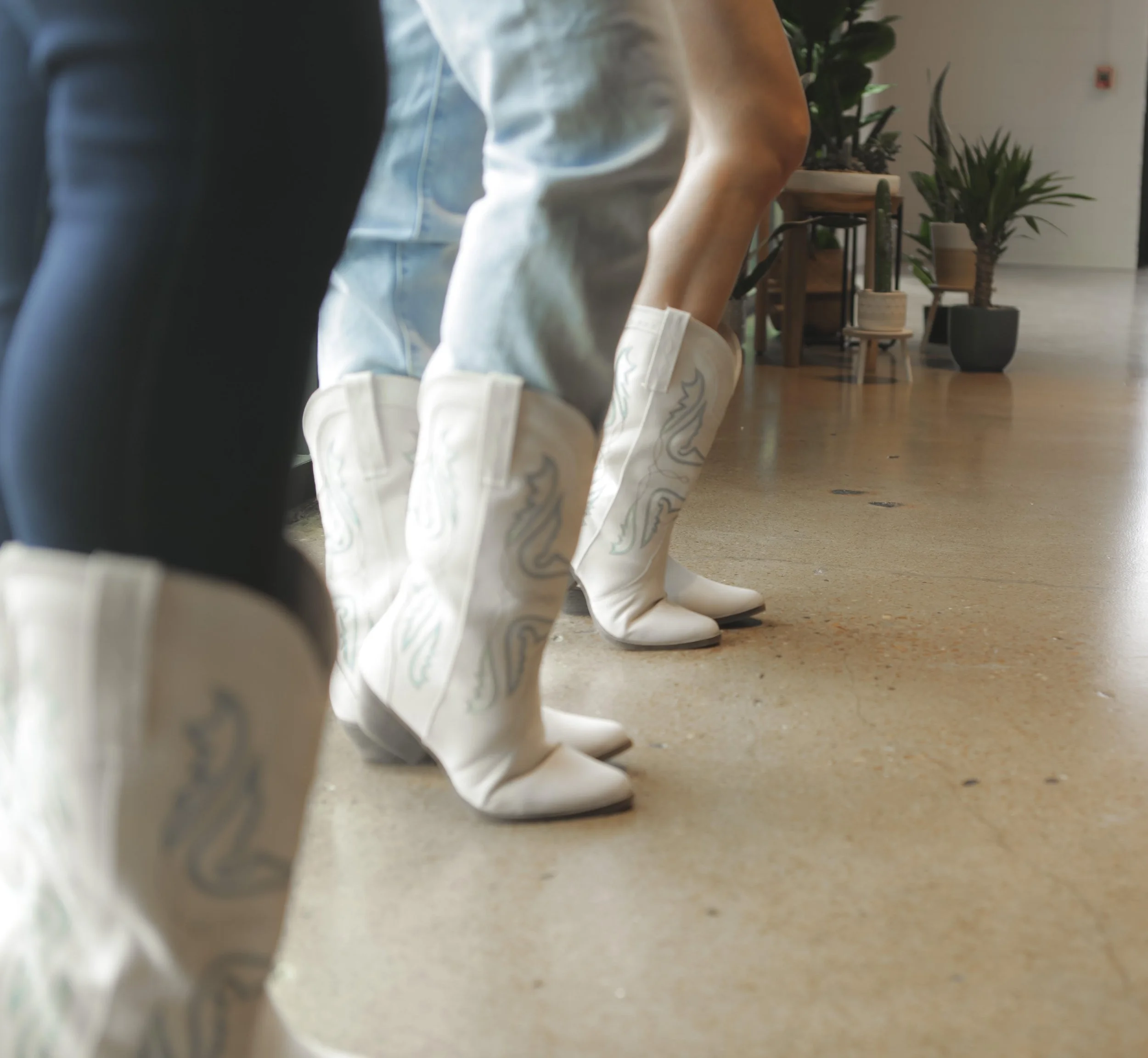
Line dancing is a journey. There’s no rush, no competition, and no finish line. Practicing at home is just another way to support yourself and enjoy the ride a little more.
So throw on some music, clear a little space, and dance it out. Every step counts, and we’ll see you on the floor at New Boots Line Dancing real soon.